Web Design · 3D Product · Concept 2026
Tessel Q4
A product launch site and a drone you build yourself, for a field drone brand.
The brief
Tessel is a fictional drone maker for people who work outdoors: surveyors, rescue teams and farmers. These buyers care about one thing above all, whether the drone will still be flying when the job needs it. Most drone websites lead with cinematic footage and leave the hard questions, such as how long it flies with a camera attached, buried in a spec sheet.
The idea
Two pages that work as one journey. The launch site tells the story and earns trust. The builder lets buyers configure their own drone and see honest flight numbers change as they choose. Every "Build your Q4" button on the launch site leads straight into the builder.
The launch site: "Higher Ground"
- The product travels with you. The drone sits in the hero above layered mountain ridges, then follows the scroll: it turns, drifts aside for the story, and lifts away before the specs. The product stays the hero without repeating the same photo.
- Words that arrive at reading pace. The brand story reveals one word at a time as you scroll, so it reads like a voice rather than a block of copy.
- Night first, daylight for decisions. The story sections are deep indigo with stars, to match the outdoor, after-dark work the drone is built for. The specs and the frame line-up sit on a light sheet that slides over the night, so the buying information is easy to read and compare.
- Real renders, not placeholders. The three frame cards (Compact, Standard, Endurance) show images rendered live from the same 3D model, in each frame's own colour.
The builder
- Choose, then see the cost in minutes. Buyers pick a frame size, motors, battery, camera (none, 4K gimbal or thermal), radio link and colour — or let "Optimise for" pick the best parts for flight time, speed, range or price. A flight model recalculates endurance and range with every change, keeping 20% of the battery in reserve, so a heavier camera visibly costs flight time.
- A model that feels physical. Soft shadows baked into the 3D model, seated propellers and slow, realistic rotor spin make the drone read as a real object rather than a render. Buyers can send it up and watch it hold altitude.
- One source of truth. The numbers on the launch site come from the same flight model as the builder, so marketing claims and product reality never disagree.
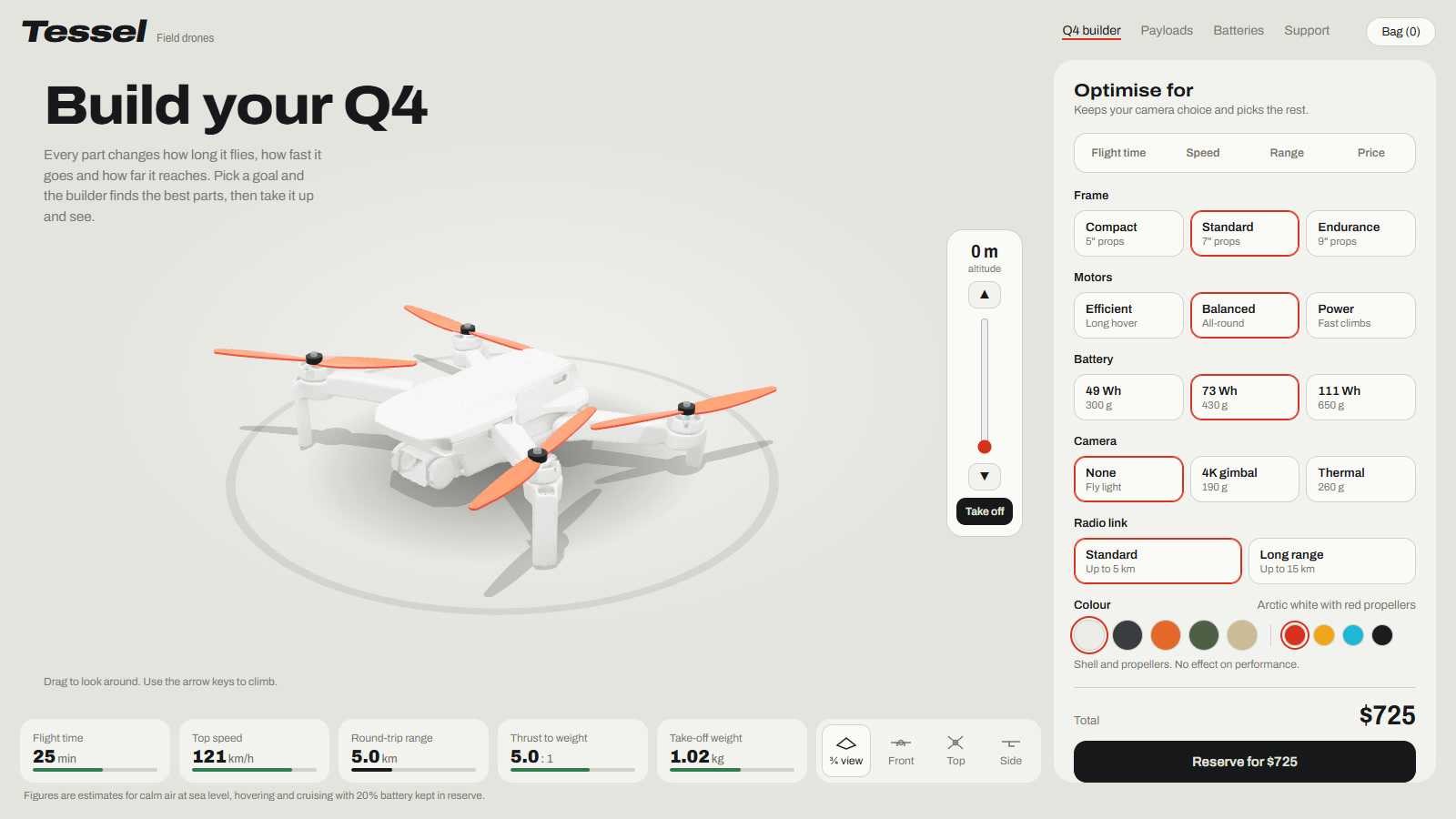
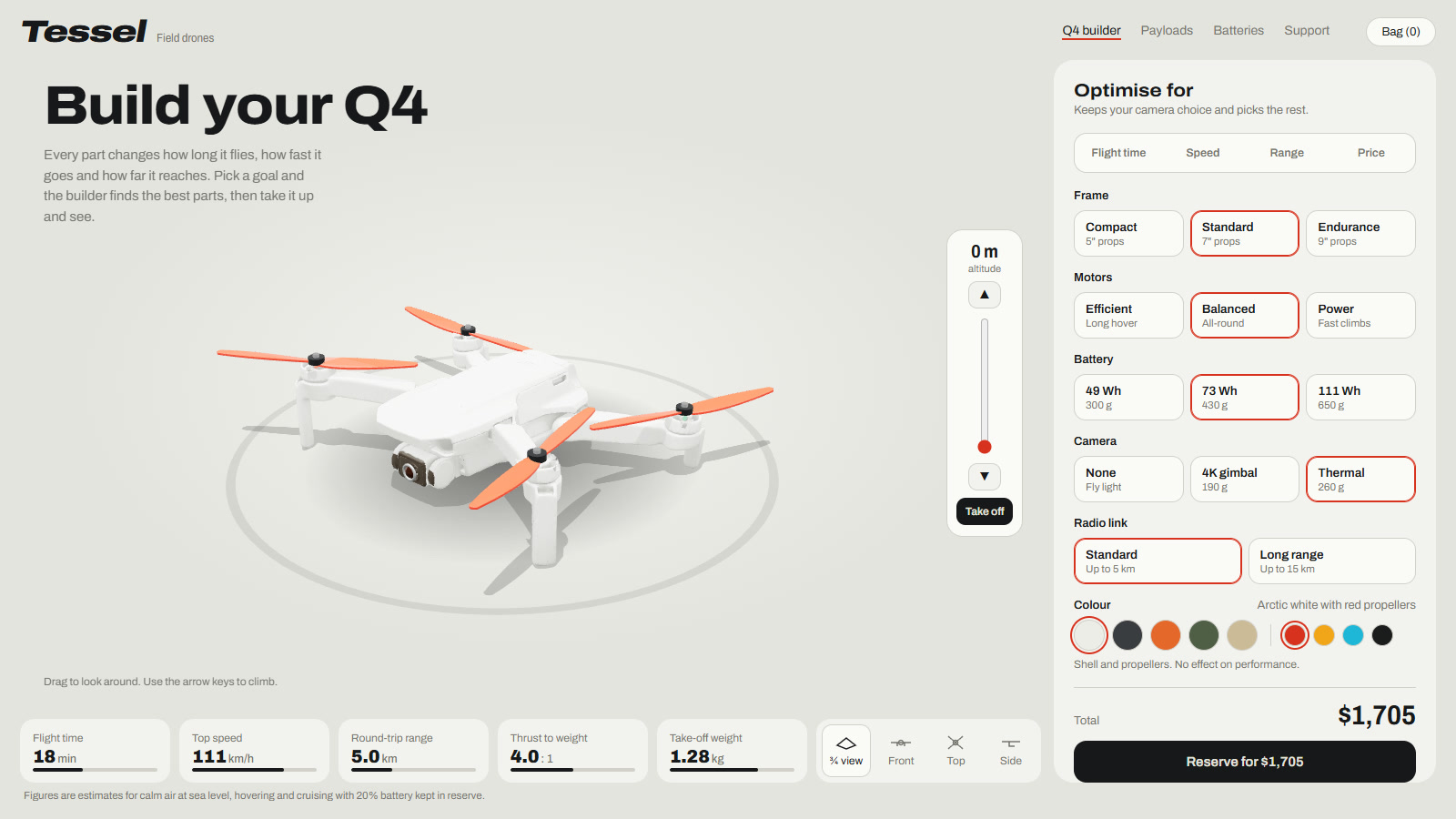
Trade-offs made visible — add a heavier camera and watch the flight time drop before you buy
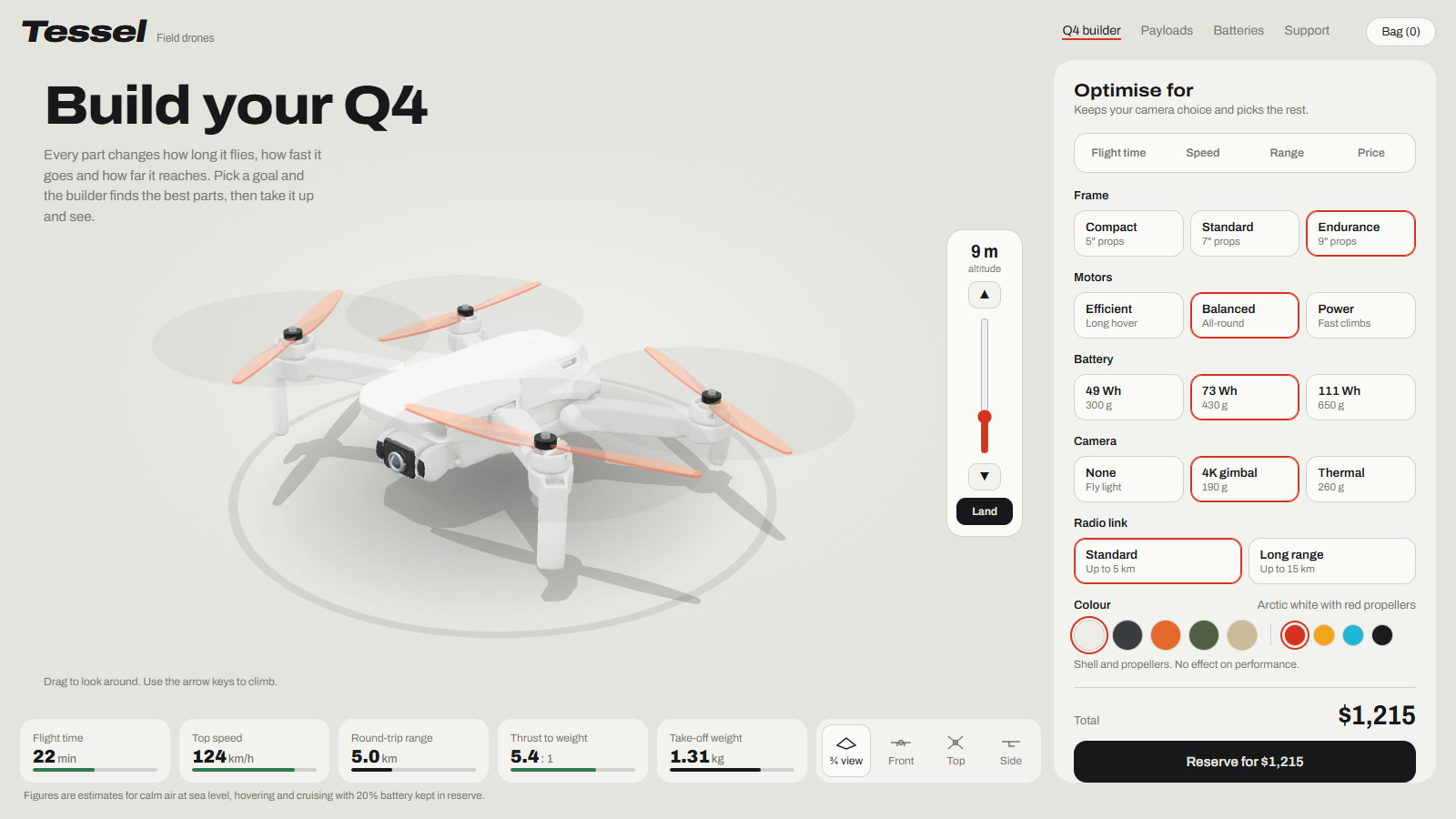
Take off — send the drone up and watch it hold altitude
Typography and colour
Archivo, a wide grotesque with variable width, gives the headlines a technical, engineered stance; the stretched "Higher Ground" title reads like equipment stencilling. The palette runs from night navy to soft violet, with one bright violet reserved for actions.
Where this approach fits
Hardware launches, configurable products (bikes, furniture, cameras), and any brand whose buyers need to trust numbers before they spend.
- A drone launch site where the product flies through the story as you scroll, linked to a builder that shows real flight times
- A configurator that makes trade-offs visible: add a heavier camera and watch the flight time drop
- Real-time 3D product visualisation with baked lighting, scroll-driven camera work and a live flight model
- A field drone brand built for work after dark: night palette, stencil-like type, honest numbers
Tessel, its customers and its flight figures are fictional. The company names in the "Flown by field teams at" strip are invented for the concept. A concept by Issaya Design.
Launching a product people need to trust before they buy?
Let's talk